
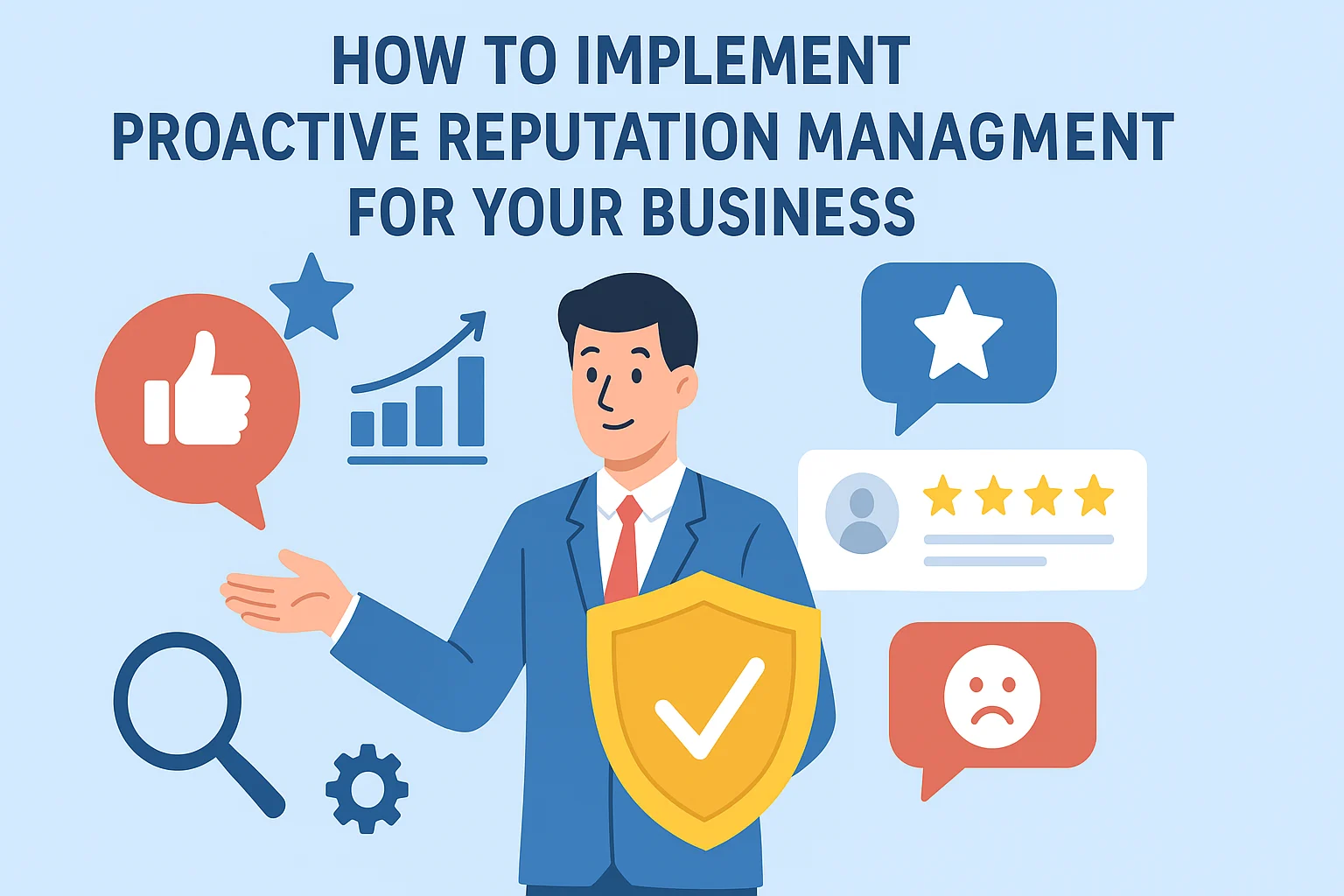
The online business world allows information to travel fast, making a brand’s reputation fragile. A single negative review, an outdated listing, or an ignored complaint can silently affect the consumer trust before the concern reaches you. This is why having a proactive online reputation management strategy is no longer optional—it’s essential.
Proactive reputation management for your business is a detailed strategy or plan designed to shape the public perception of your brand or organization online. Here is a step-by-step guide to implementing proactive reputation management to prevent your business from a reputation crisis and keep your brand’s reputation healthy, trackable, and scalable.
Proactive Reputation Management of Your Business
Below are seven simple steps to create a proactive reputation management strategy:
1. Google Your Company
Before you manage your reputation online, you need to understand the current picture of your company. This will help you identify your brand’s strengths and weaknesses. Search for your company name, product, or services and see what comes up in the results. Don’t stop at one page; search multiple pages and note what is positive, negative, or neutral.
Look for outdated information or negative articles that could influence the customer perception about your brand. If you find old or inaccurate information, make a note and plan to correct it. This will help you know early if any harmful content is circulating online, and you can promptly take the proper steps to remove it.
2. Monitor Your Brand Mentions Often
The next step is to monitor your brand mentions and how your brand is being discussed regularly. The internet stays active all the time, and your brand can be mentioned anywhere, whether it’s blogs, social media, or Reddit threads. To monitor, you can use tools like Google Alerts, Mention, or ReviewTracker. These real-time brand monitoring tools help you stay updated whenever your brand appears online.
When you spot a mention early, you can respond quickly, whether to thank someone for a positive review or to address a concern before it spreads. Even a short response to feedback shows the customer that you are paying attention and further builds long-term trust.
3. Online Review Management
Online reviews are powerful and can make or break your business. Before buying or taking your services, people usually check reviews. Negative reviews, in general, and unresponsive ones can push potential customers away. This is why online review management should be a part of your proactive plan. You can encourage happy customers to share honest reviews, but don’t ignore negative reviews.
Instead, respond politely and, if possible, try to fix the issue. By being responsive and handling reviews professionally, you can even turn negative reviews into an opportunity to prove your reliability. Try to respond within 24-72 hours to show that you care about customer feedback, which signals that your business is human and responsive.
4. Publish Positive Content
One of the strongest ways to shape how people see your business is by publishing your own positive content. You might not be able to control every online mention, but you can control the story you tell. Create helpful, meaningful content that addresses consumers’ pain points, such as blog posts, how-to guides, FAQs, and more. Maintain a timely publishing calendar to post your content. Additionally, promote it via LinkedIn and Google posts to improve visibility.
Consistent publishing builds authority in your industry and fills search results with information you can stand behind. This content helps populate search engines with valuable, uplifting content that reflects your expertise and reliability. This doesn’t just push negative content down, but also helps attract new customers who see your business as trustworthy and professional.
5. Keep Your Social Media and Business Listing Up to Date
Your GMB (Google My Business) and social media profiles act as the face of your business. If they are outdated, it may make customers wonder whether the company is still in business. Make sure your contact details are up to date and the information mentioned is correct.
Update your profile regularly with new posts, offers, or any announcements. These minor updates show that your business is active and engaged. Respond to comments and DM in 24- 48 hours. Staying active on these platforms improves your visibility and helps your audience see that the brand is trustworthy.
6. Create a Crisis Plan
Even when you do everything right, unexpected situations can still happen. It might be a product issue, a negative viral post, or something entirely out of your control. Having a crisis plan helps you stay prepared. The plan should outline who will speak for the company, the messages you’ll share, and how you’ll communicate with both customers and the media.
It should also include a clear process for investigating and solving the issue quickly. A well-prepared plan ensures your team knows exactly what to do and prevents reactions that can make things worse.
7. Measure, Analyze, and Refine Your Progress
To stay consistent with proactive reputation management, measure your progress and improve it. Regularly analyze what’s working and what is not. Track your online reviews, social media engagement, and search results for changes. Look at metrics like the number of positive mentions, review ratings, etc.
If something isn’t improving, try adjusting your strategy. Measuring your progress helps you learn and refine your approach, enabling you to maximize your efforts and build a strong, sustainable business reputation.
How a Right Partner Can Make a Difference
Proactive reputation management means being aware and ready. You can’t control everything that’s said about your business online, but you can control how you respond to it. If managing all this feels like a lot, you don’t have to do it alone. DexDel offers innovative tools and professional support to help you track mentions, manage reviews, and strengthen your brand’s online image. Keep in mind that building a reputation takes time. The above-mentioned tips for a proactive strategy with the right partner can help you stay ready and safeguard your brand reputation in the event of future image crises.